
My Teeth Are Worn Down—Can They Be Rebuilt? A Guide to Full Mouth Rehabilitation
Learn why teeth become shorter or worn, how dentists diagnose the cause, and which conservative or comprehensive treatments may rebuild a smile.
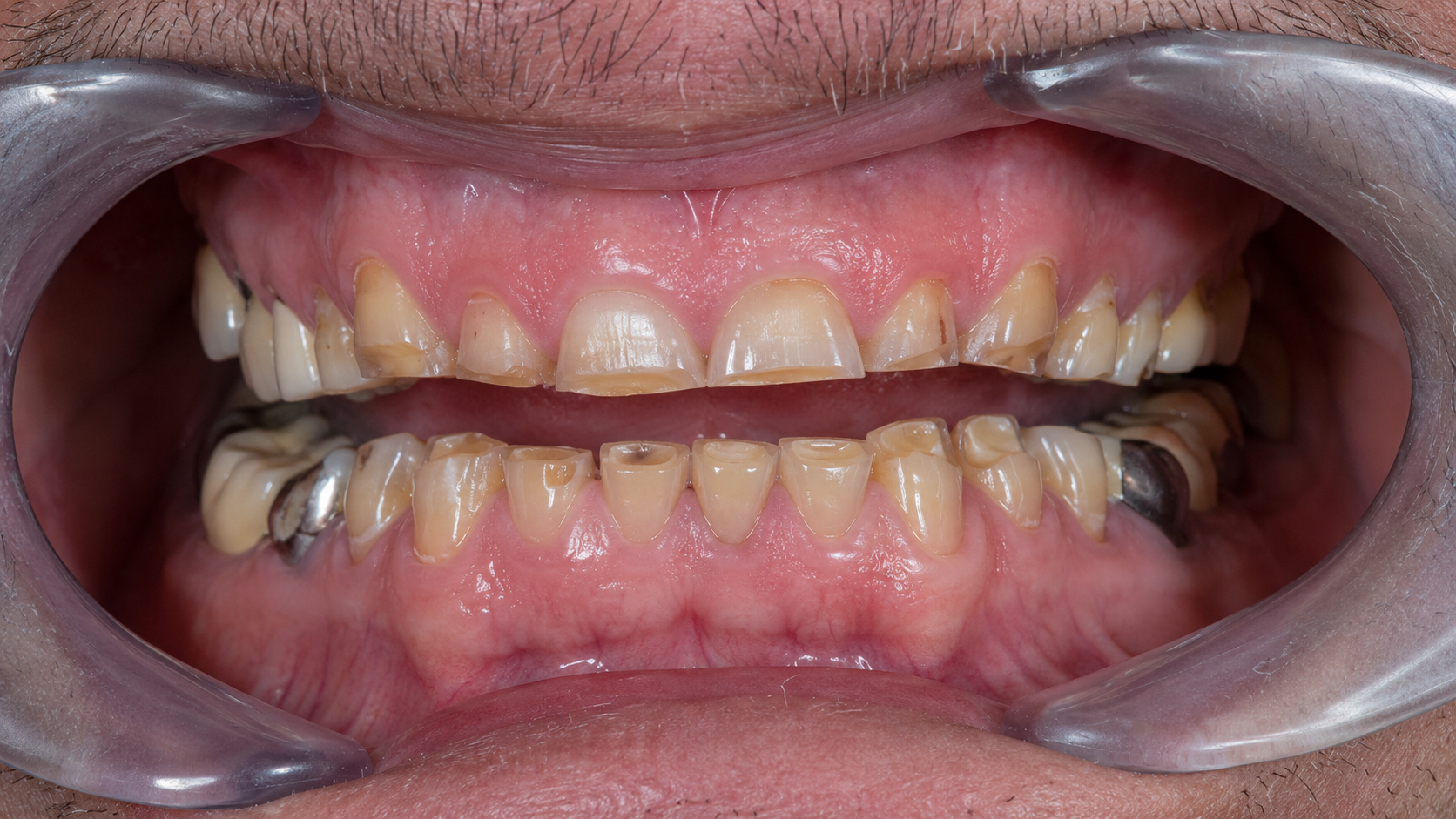
Contemporary Dental Concepts • Tempe, Arizona
The short answer
Worn teeth can often be rebuilt, but the right treatment depends on why they wore down, how much structure remains, the bite, and the health of the teeth and gums. Full mouth rehabilitation may combine additive bonding, veneers, onlays, crowns, implants, or other care; it does not automatically mean crowning every tooth.
Why Are My Teeth Getting Shorter?
Tooth wear is often multifactorial. Tooth-to-tooth contact, grinding or clenching, dietary or stomach acids, missing teeth, an unstable bite, and the condition of older restorations can all contribute. The visible pattern alone does not prove that bruxism is the only cause.
A careful history may explore diet, reflux symptoms, sleep habits, medications, previous dental treatment, and when changes were first noticed. The examination may include photographs, scans or models, radiographs when indicated, and a bite assessment.
- Flattened or shortened edges
- Chips, cracks, or rough surfaces
- Sensitivity to temperature or touch
- Thinning or cupping of enamel
- Changes in the bite or facial support
- Repeated fracture of older restorations
What Does Full Mouth Rehabilitation Mean?
Full mouth rehabilitation is coordinated treatment across many teeth to improve health, function, comfort, and appearance. It is a planning concept rather than one single procedure. Some patients need treatment in stages; others can be monitored or treated more selectively.
The plan may include direct composite additions, onlays, veneers, crowns, root canal treatment where genuinely indicated, periodontal care, bridges, or implants. The most appropriate combination depends on which teeth can be preserved and how forces will be managed.
Does Every Worn Tooth Need a Crown?
No. Modern adhesive techniques may allow selected worn teeth to be rebuilt by adding material with limited additional reduction. In other cases, extensive damage, large restorations, cracks, or limited remaining structure may make greater coverage appropriate.
A conservative plan weighs biological cost, strength, esthetics, repairability, time, and expense. Sometimes the safest decision is to monitor stable wear before beginning extensive treatment.
- Additive composite bonding
- Ceramic or composite onlays
- Porcelain veneers in selected areas
- Crowns where greater coverage is justified
- Replacement of missing teeth with bridges or implants
- Protective appliances and prevention
How Is a New Bite Planned?
Rebuilding severely worn teeth can change tooth length and the way the jaws meet. Planning may involve a diagnostic design, trial additions or provisional restorations, and a period of evaluation before final restorations are completed.
The team monitors comfort, speech, chewing, appearance, tooth response, and restoration stability. Complex care may involve coordination with dental specialists, depending on periodontal, orthodontic, endodontic, surgical, or prosthetic needs.
How Do You Protect the Result?
Long-term care addresses both the restorations and the factors that contributed to wear. That may include dietary counseling, medical referral for suspected reflux, management of dry mouth, repair of damaging habits, periodontal care, and a protective appliance when appropriate.
Maintenance visits allow the dentist to identify small chips, changes in the bite, recurrent decay, or gum problems before they become larger issues. Individual restorations may still need repair or replacement over time.
How Is Treatment Planned?
Find the causes
Combine history, examination, records, and risk assessment rather than assuming all wear is grinding.
Stabilize disease
Address decay, gum disease, infection, and active erosion before definitive reconstruction.
Test the design
Preview tooth length, appearance, speech, and bite with a digital or physical trial when appropriate.
Treat and maintain
Sequence care, reassess response, and protect the result with individualized prevention.
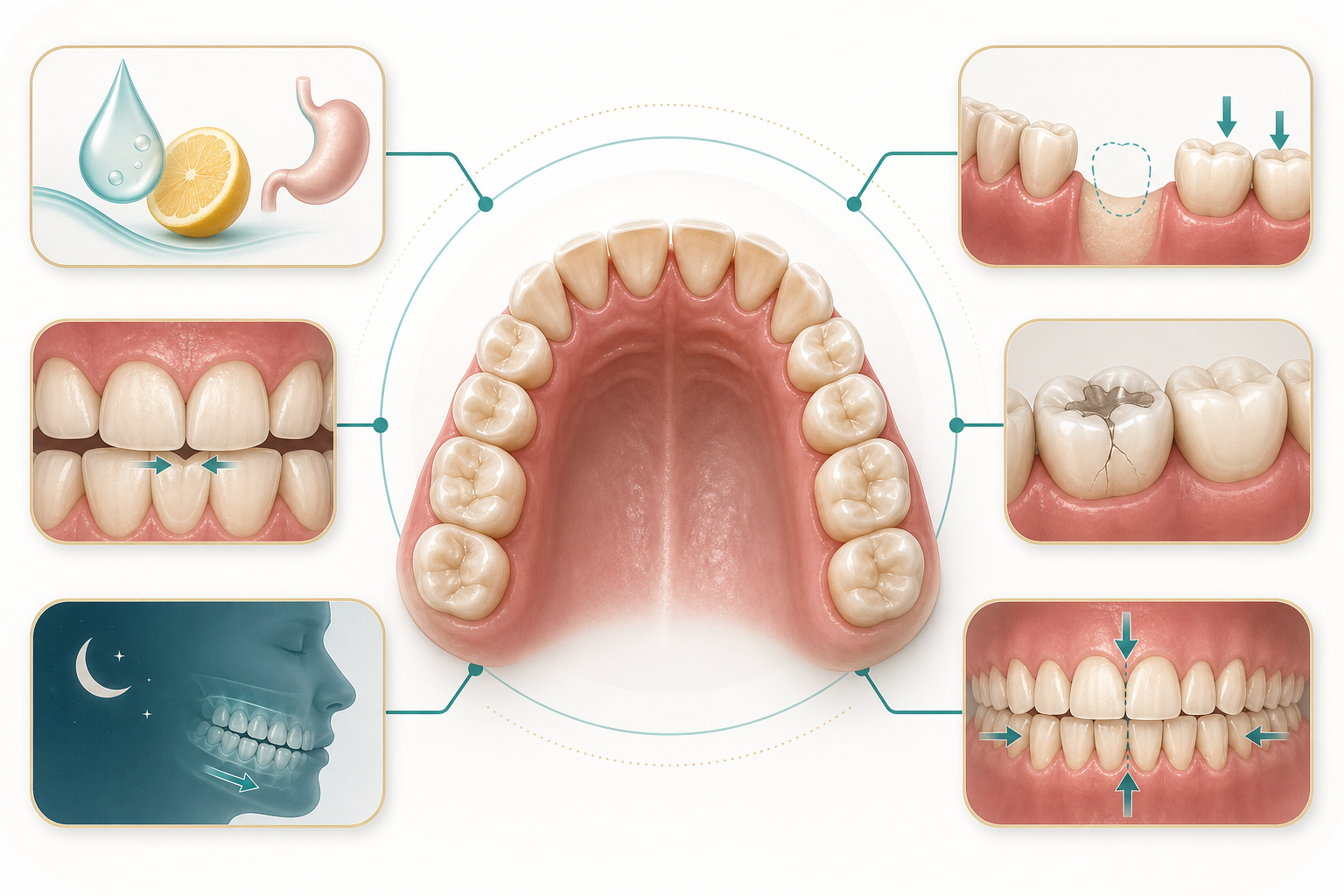
How We Plan a Full Mouth Rehabilitation
Frequently Asked Questions
Can severely worn teeth really be rebuilt?
Often, yes. Available options depend on remaining tooth structure, the cause and activity of wear, gum and bone health, the bite, and the condition of each tooth. An examination and diagnostic records are needed before choosing a treatment.
Does worn enamel grow back?
No. Lost enamel does not biologically regenerate. Dentists may protect or replace lost form with bonded composite, ceramic restorations, or other treatment while also addressing factors that could continue the wear.
Are worn teeth always caused by grinding?
No. Grinding or clenching may contribute, but acid erosion, tooth-to-tooth contact, missing teeth, bite factors, older restorations, and other influences can produce or accelerate wear. More than one factor may be present.
Does full mouth rehabilitation mean crowns on every tooth?
No. Treatment may combine monitoring, additive bonding, onlays, veneers, crowns, implants, bridges, or other care. The aim is to use the least invasive approach that can reasonably meet the clinical needs.
How long does full mouth rehabilitation take?
Timing varies with disease control, the number and type of procedures, healing needs, specialist coordination, and whether treatment is staged. A personalized plan should explain the sequence and decision points before treatment begins.
Sources and Further Reading
- PubMed: Rehabilitation of the worn dentition with minimally invasive concepts—systematic review and meta-analysis (2025)
- PubMed: Restorative therapy of erosive tooth wear lesions—indirect strategies (2025)
- ADA MouthHealthy: Teeth Grinding
Sources were selected for clinical context. They do not replace the reviewer’s individualized judgment.
Medical disclaimer: This article is for general educational purposes and does not replace an individualized dental examination, diagnosis, or treatment plan. Treatment options, risks, timing, and outcomes vary by patient.