
Dental Implants in Tempe, AZ
Dental implants offer a stable, natural-looking way to replace missing teeth and rebuild confidence in your smile. Dr. Trent Smallwood creates personalized restorative plans for patients missing one tooth, several teeth, or seeking greater stability for a denture.
A consultation helps determine whether implants are appropriate for your health, goals, and available bone.
Single-Tooth Replacement
Restore one missing tooth without relying on adjacent teeth for support.
Multiple-Tooth Solutions
Explore implant-supported options for several missing teeth.
Denture Stabilization
Improve denture stability for appropriate candidates.
Personalized Planning
Recommendations based on your oral health, bone, bite, and goals.
Missing Teeth Can Affect Daily Life
A missing tooth may influence more than appearance. Depending on its location, it can affect chewing, speech, confidence, nearby tooth position, and how comfortably you use your smile.
Avoiding photos
Some people become less comfortable showing their smile.
Difficulty chewing
Missing teeth may make certain foods harder to manage.
Unstable denture
A removable denture may shift during meals or conversation.
Changes in speech
Tooth loss can influence how some sounds are formed.
Shifting teeth
Nearby teeth may gradually move toward an open space.
Social confidence
Some patients feel self-conscious in everyday situations.
Dental implants may provide a stable foundation for a crown, bridge, or denture when the patient is an appropriate candidate. Explore your implant options.
What Is a Dental Implant?
A dental implant is a biocompatible post placed in the jaw to replace the root portion of a missing tooth. An abutment connects the implant to the visible restoration.
Depending on the plan, the restoration may be a crown, bridge, or denture. Bone heals around the post in a process commonly called osseointegration. The complete process may involve several appointments and healing periods.

What Kind of Tooth Replacement Are You Considering?
One Missing Tooth
A single dental implant may support an individual crown and may avoid the need to reshape neighboring teeth for a traditional bridge.
Potential option: Implant-supported crownSeveral Missing Teeth
Multiple implants may support individual crowns or an implant-supported bridge, depending on the number and location of missing teeth.
Potential options: Individual implant crowns; implant-supported bridgeLoose Denture
Strategically positioned implants may help stabilize a removable denture for appropriate patients.
Potential option: Implant-retained or implant-supported dentureMost or All Teeth
Patients missing most or all teeth may be evaluated for a full-arch solution, an implant-supported denture, or another restorative plan.
Potential options: Full-arch implant-supported restoration; implant-supported denture; conventional dentureThis guide is educational and does not diagnose candidacy. The number and position of implants can only be determined after an examination and appropriate diagnostic imaging.
Why Patients Consider Dental Implants
Stable support
Implants may provide firm support for crowns, bridges, or dentures.
Natural-looking restoration
The visible restoration can be shaped and shaded to coordinate with the surrounding smile.
Independent replacement
A single implant can replace a tooth without using neighboring teeth as bridge supports.
Chewing confidence
A stable restoration may make eating feel more comfortable for appropriate patients.
Denture support
Implants may reduce unwanted denture movement in a properly planned solution.
Long-term option
With appropriate care, implants can be durable, though longevity varies.
Could Dental Implants Be Right for You?
Candidacy depends on the complete clinical picture. A dentist may review:
- Missing or failing teeth
- Gum health
- Available jawbone
- General health
- Daily oral hygiene
- Follow-up availability
- Tobacco use
- Conditions and medications
- Bite forces or grinding
- Realistic expectations
Not having enough bone does not automatically rule out treatment. Some patients may be evaluated for bone grafting or an alternative approach.

How Dental Implant Treatment Is Planned
Consultation and health review
Discuss goals, dental and medical history, medications, and concerns.
Examination and planning
Evaluate gums, teeth, bite, and bone. Diagnostic imaging may be recommended.
Preparatory care
Extraction, gum treatment, bone grafting, or healing may be needed.
Implant placement
The implant post is surgically positioned according to the treatment plan.
Healing and integration
The jawbone heals around the implant. Healing time varies.
Restoration and maintenance
A custom crown, bridge, or denture is attached when ready, followed by ongoing care.
Some steps may be combined, changed, or completed by coordinated providers. Treatment timelines can range from several months to longer depending on healing, bone needs, and case complexity.
Dental Implant Options
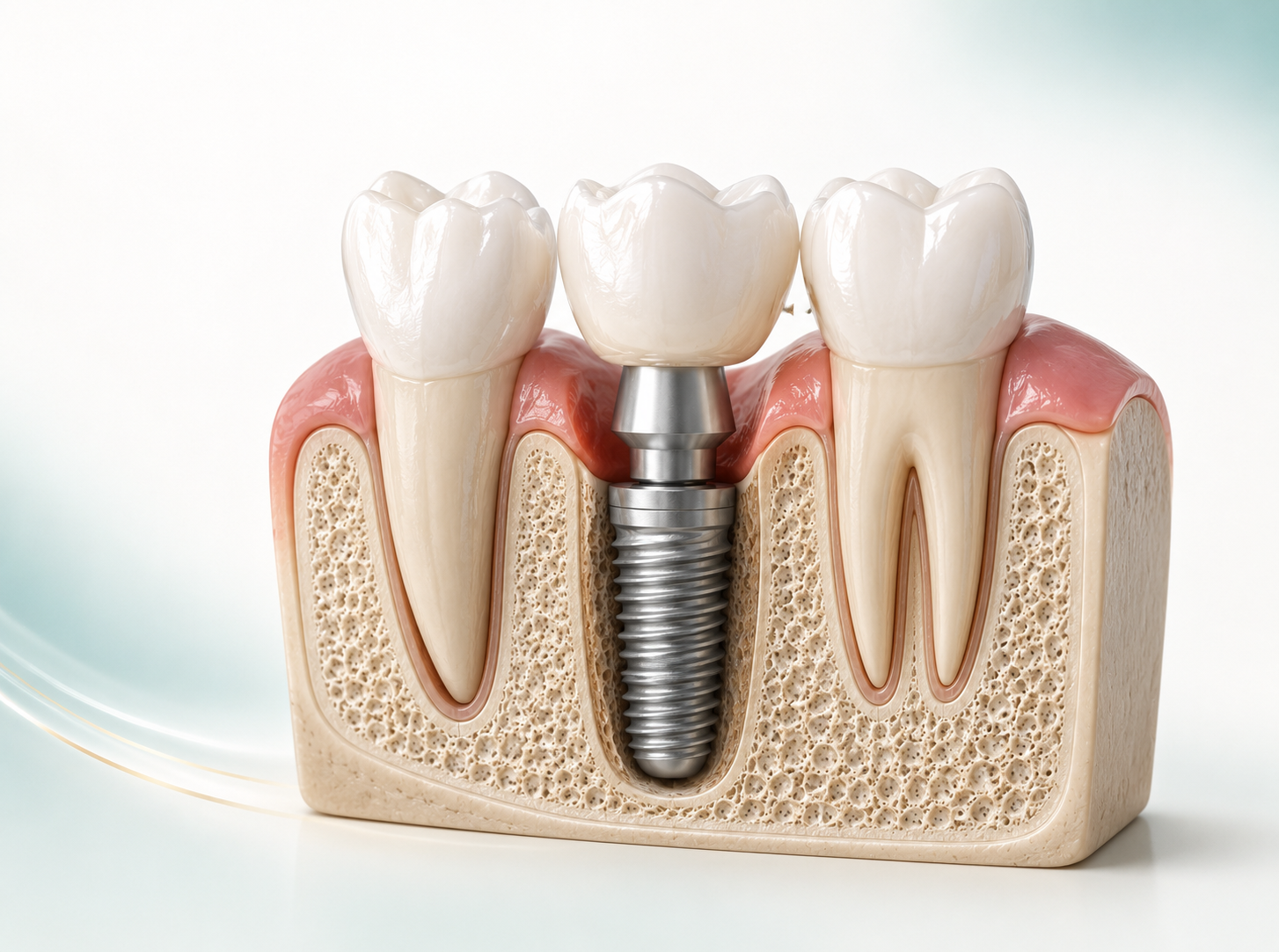
Single-Tooth Implant
An implant post and custom crown may replace one missing tooth while preserving neighboring teeth.
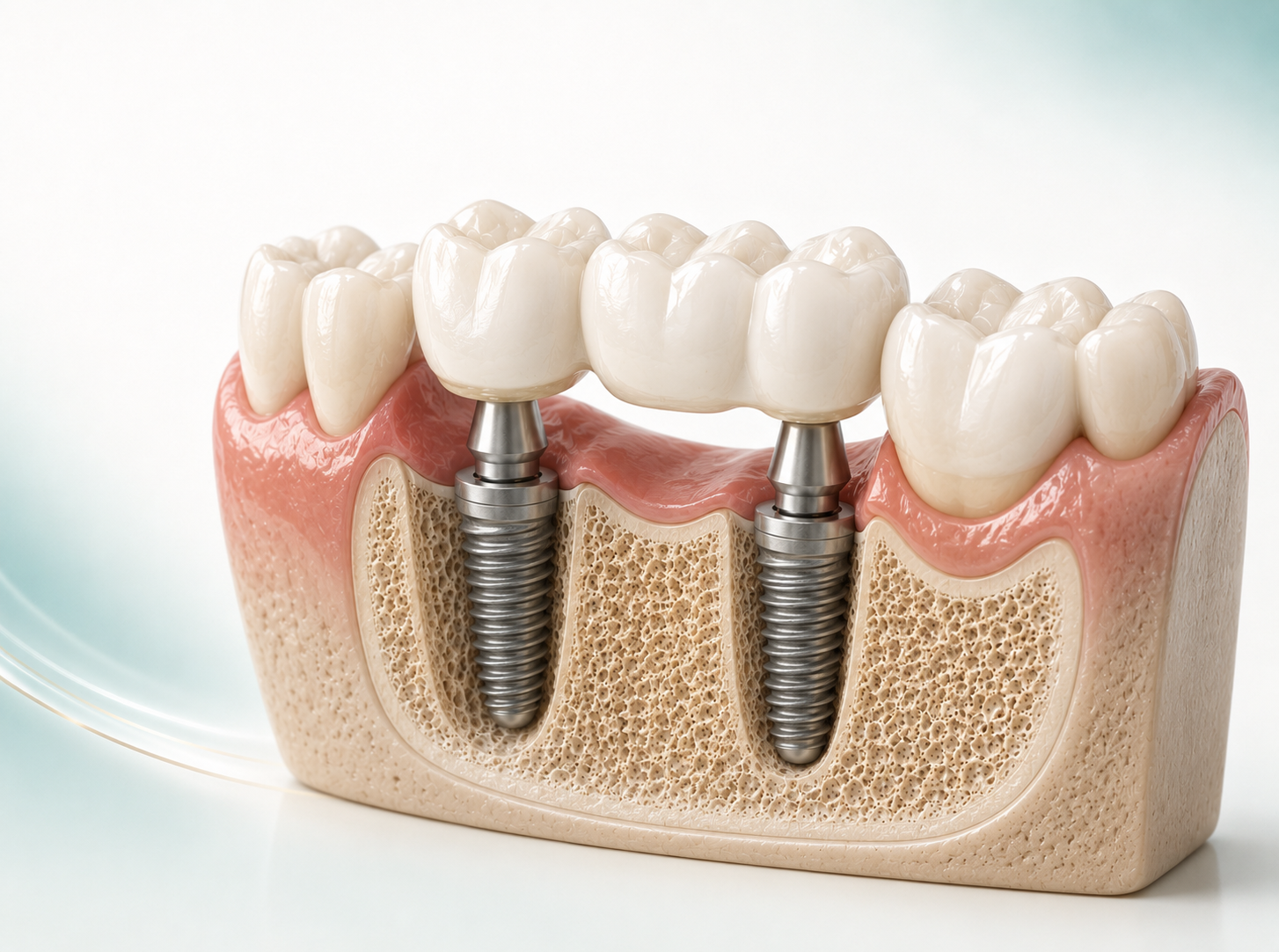
Implant-Supported Bridge
May replace several adjacent missing teeth without an implant for every tooth.
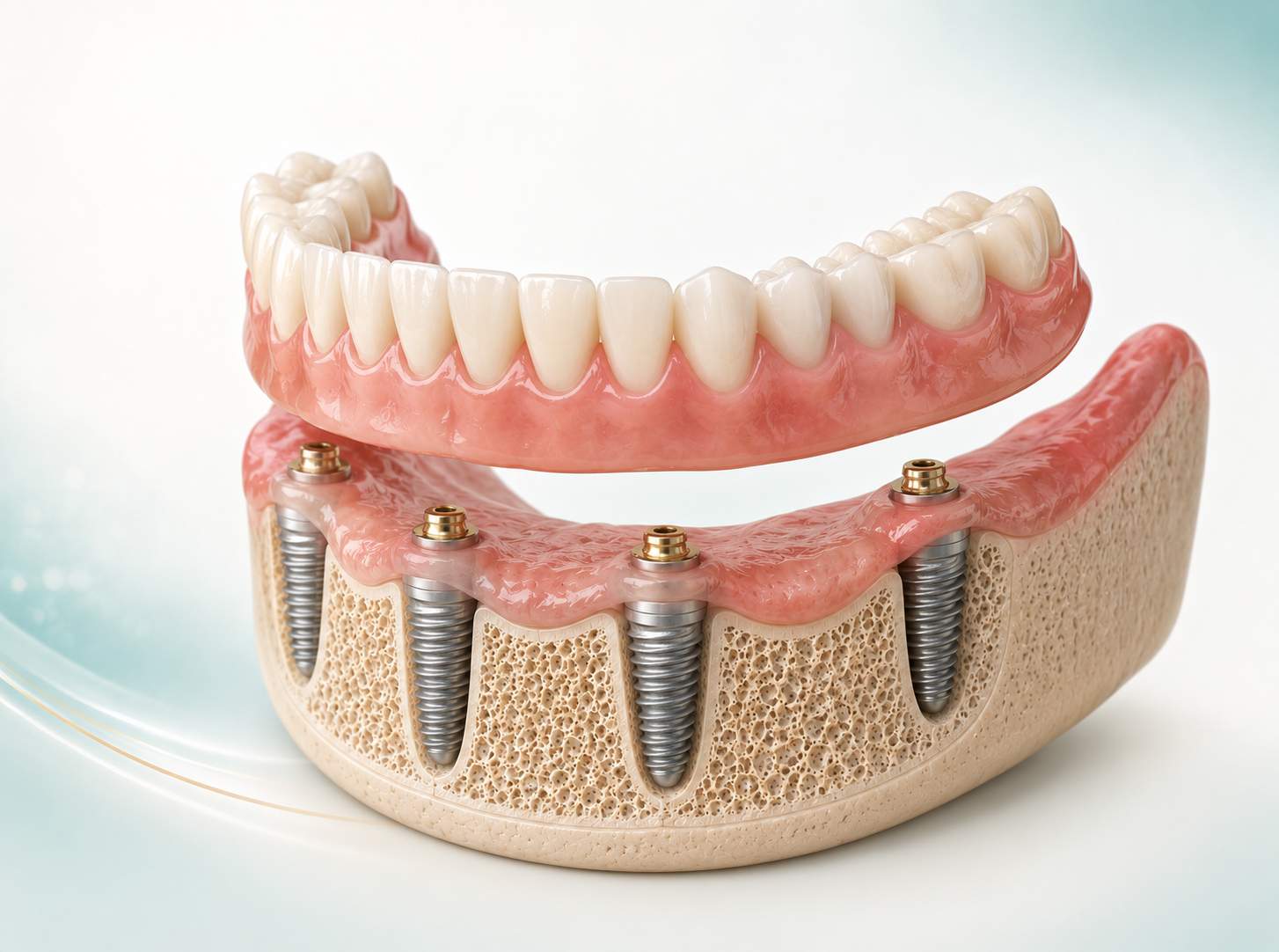
Implant-Supported Denture
Implants may provide additional support and stability for a removable or fixed denture design.
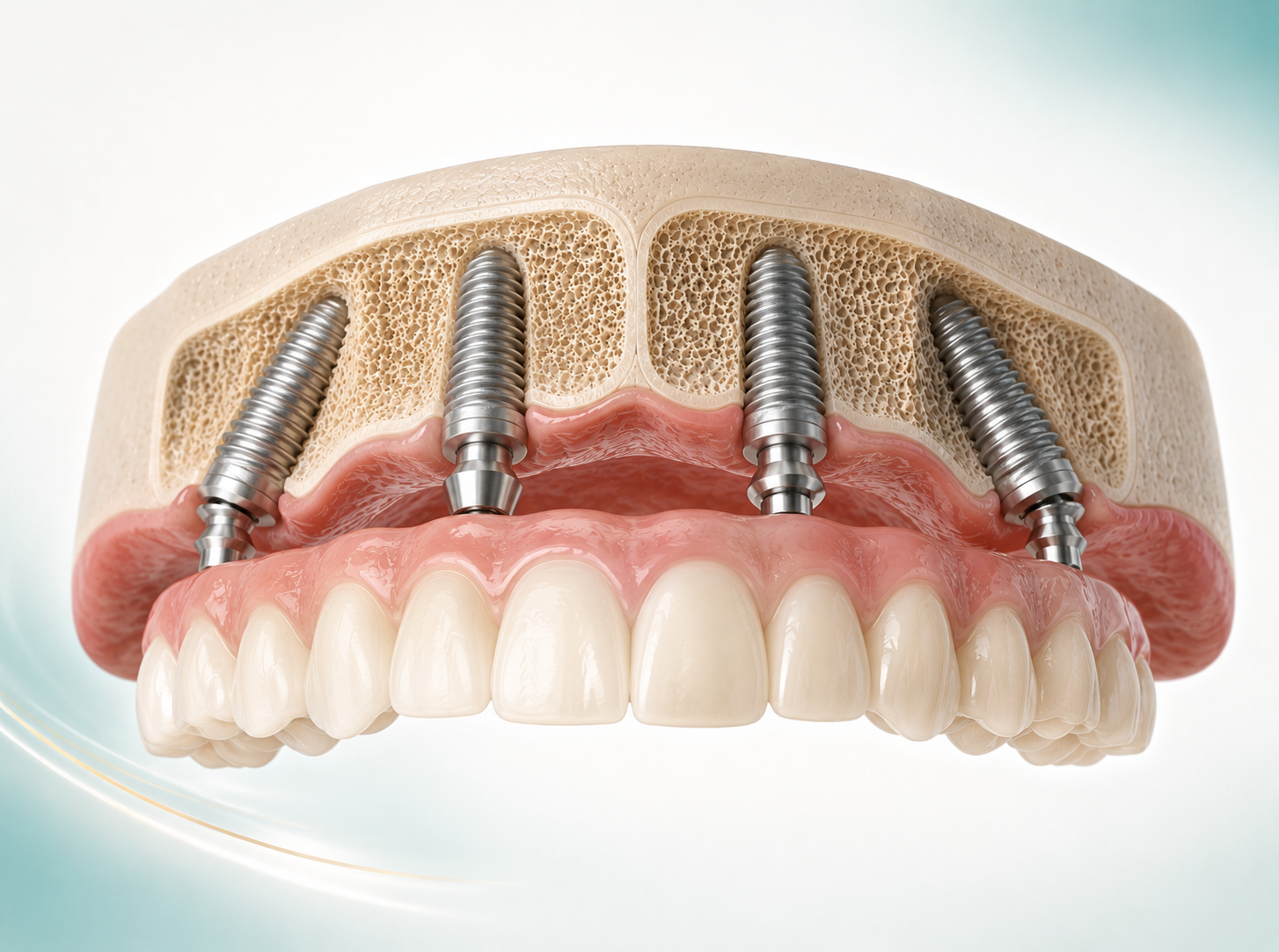
Full-Arch Restoration
May replace most or all teeth in one arch for carefully selected patients.
Available options depend on diagnosis, anatomy, health, restorative space, bone, bite, and provider recommendations.
Dental Implants, Bridges, and Dentures
| Consideration | Dental Implant | Traditional Bridge | Removable Denture |
|---|---|---|---|
| Support | Implant placed in the jaw. | Neighboring teeth. | Gums, teeth, implants, or a combination. |
| Neighboring teeth | Usually need not be reshaped solely for support. | Supporting teeth commonly require preparation. | May use clasps, attachments, tissue, or implants. |
| Removability | Most crowns and bridges are not patient-removable. | Not patient-removable. | Usually removed unless fixed to implants. |
| Surgery | Requires surgical placement. | Normally no implant surgery. | Conventional designs may not require surgery. |
| Bone | Adequate bone or possible augmentation. | Suitable supporting teeth are required. | Depends on whether implants are used. |
| Treatment length | Often includes months of healing. | May require fewer appointments, case-dependent. | Varies with extractions, healing, and design. |
| Maintenance | Brushing, directed cleaning, monitoring. | Cleaning beneath the replacement tooth. | Daily removal and cleaning unless fixed. |
| Best fit | Appropriate surgical candidates seeking stable replacement. | Suitable support teeth or no implant surgery. | Replacing several or all teeth with a removable option. |
No single option is best for every patient. Dr. Smallwood can explain benefits, limitations, requirements, and alternatives relevant to you. Learn about dental bridges or dental crowns.
What Should You Expect During Healing?
Local anesthesia and other comfort measures may be discussed based on the procedure and clinic protocols. Soreness, swelling, bruising, or tenderness can occur; experiences vary.
Integration may take several months. Other procedures, implant location, health, and healing response affect timing.
You may be advised to choose softer foods temporarily and avoid pressure on the surgical area. Follow your provider's instructions.
The final restoration is usually placed after sufficient stability and healing. A temporary may be possible in some cases.
How to Care for Dental Implants
Implants are not immune to plaque, gum inflammation, bone loss, wear, or restorative complications.
- Brush carefully twice daily
- Clean between implants and teeth
- Use recommended tools
- Attend regular examinations
- Maintain professional cleanings
- Avoid tobacco where possible
- Discuss clenching or grinding
- Report looseness, pain, bleeding, or swelling
Maintenance varies for an implant crown, bridge, removable denture, or full-arch restoration.
How Much Do Dental Implants Cost?
Cost varies with the number of implants, final restoration, extractions, bone or gum preparation, imaging, surgical complexity, temporary restorations, laboratory components, insurance benefits, and coordinated care.
Because implant treatment is highly personalized, an examination is required before an accurate treatment estimate can be provided.
A Simple Look at Dental Implant Treatment
This video is for general education. Your treatment sequence may differ based on your diagnosis and restorative plan.
Personalized Implant Planning in Tempe
Replacing a missing tooth is not only about filling a space. The restoration must be planned around your smile, bite, surrounding teeth, gum health, and long-term comfort. Dr. Trent Smallwood approaches implant-related care through both a restorative and cosmetic lens, helping patients understand their options before moving forward.
Personalized planning
Recommendations shaped around your oral health and goals.
Cosmetic and functional perspective
Attention to appearance, feel, and bite.
Clear education
Understand stages, alternatives, limitations, and maintenance.
Premium experience
Thoughtful care in a refined Tempe environment.
Meet Dr. Smallwood and explore full mouth rehabilitation.

Contemporary Dental Concepts welcomes patients from Tempe, Scottsdale, Phoenix, Chandler, Mesa, Gilbert, and nearby East Valley communities.
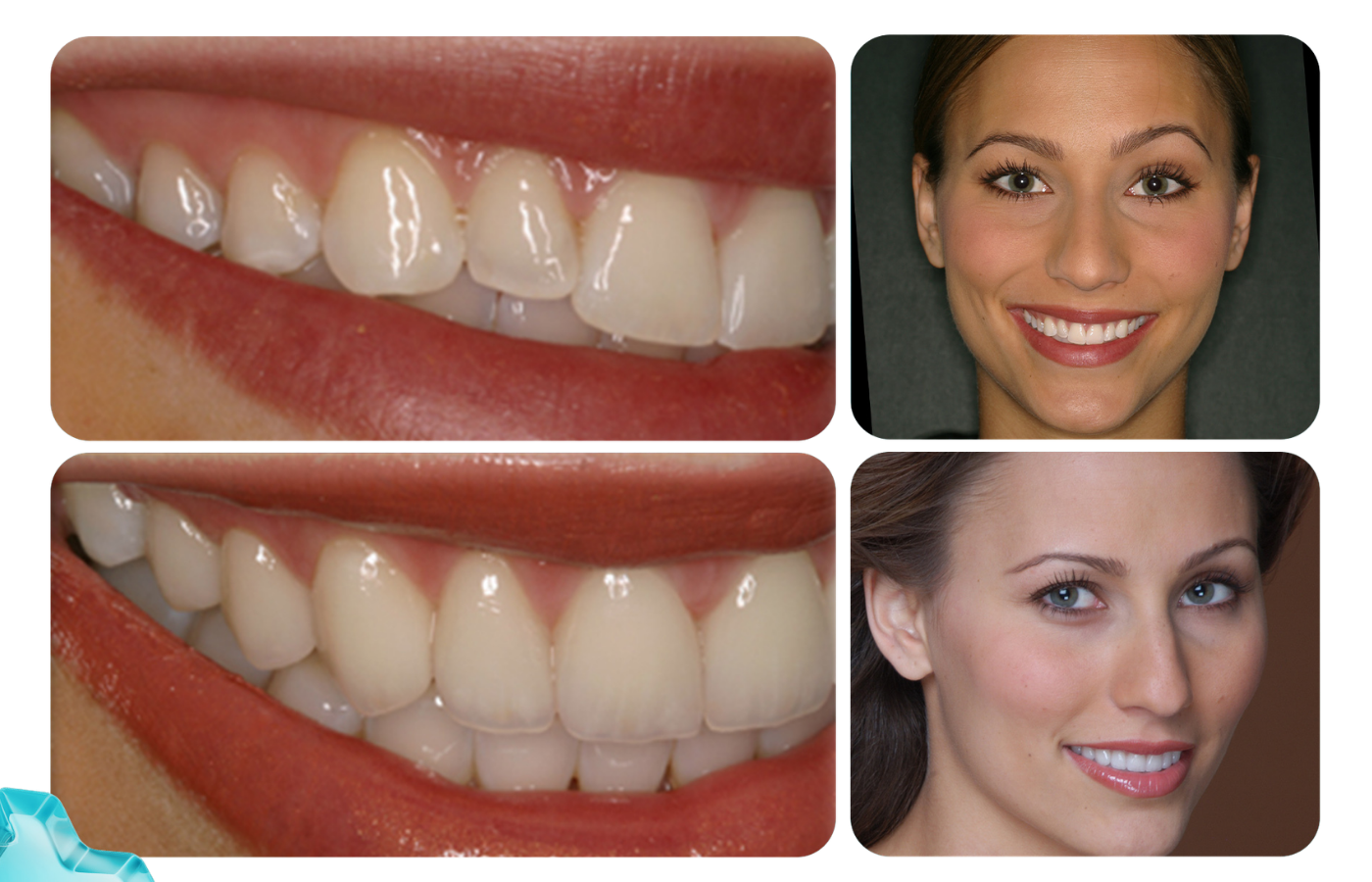
Restoring Confidence One Step at a Time
“Super friendly team, high tech yet relaxing office, and most importantly my teeth look and feel great. Will be back!”
Patient first name or initials: Rebecca Truscott
Treatment category: Dental Implants
Dental Implant FAQs
A dental implant is a post placed in the jaw to replace the root portion of a missing tooth. It can support a crown, bridge, or denture depending on the treatment plan.
Candidacy depends on oral health, bone, general health, medications, tobacco use, hygiene, and restorative needs. An examination and diagnostic assessment are required.
Placement is generally performed using appropriate anesthesia. Temporary soreness, swelling, tenderness, or bruising may occur. Discuss comfort and recovery with your provider.
It often takes several months for bone healing. Extractions, grafting, healing response, and restoration complexity can extend the timeline.
Some patients may qualify for a temporary restoration near placement, but immediate loading is not appropriate for every case. Stability, bone, bite forces, and the plan determine timing.
No dental treatment lasts forever with certainty. Longevity depends on hygiene, tissues, bite, tobacco use, health, restoration wear, and maintenance.
Some patients may be evaluated for bone grafting or another preparatory procedure. Others may need an alternative. Diagnostic imaging helps determine possibilities.
Yes. Depending on the case, implants may support individual crowns, an implant-supported bridge, or an implant-supported denture.
Implants may add retention and stability for certain dentures. Number and location depend on anatomy, bone, bite, and design.
Use daily brushing and clean around the restoration and gumline. Your team may recommend floss, interdental brushes, water flossers, or other tools.
Coverage varies. Some plans contribute toward parts of treatment, while others classify implants differently. Confirm benefits with your insurer.
A consultation may include goals, history, oral examination, bite evaluation, and diagnostic imaging recommendations. Dr. Smallwood can explain options, alternatives, and next steps.
Ready to Explore Dental Implants?
Schedule a consultation with Contemporary Dental Concepts to discuss missing teeth, denture stability, implant candidacy, and personalized restorative options in Tempe, AZ.
A virtual consultation is an introductory conversation and does not replace an in-person examination, diagnostic imaging, or clinical diagnosis. Implant placement is surgical; risks, alternatives, and final recommendations should be discussed with the treating dentist.